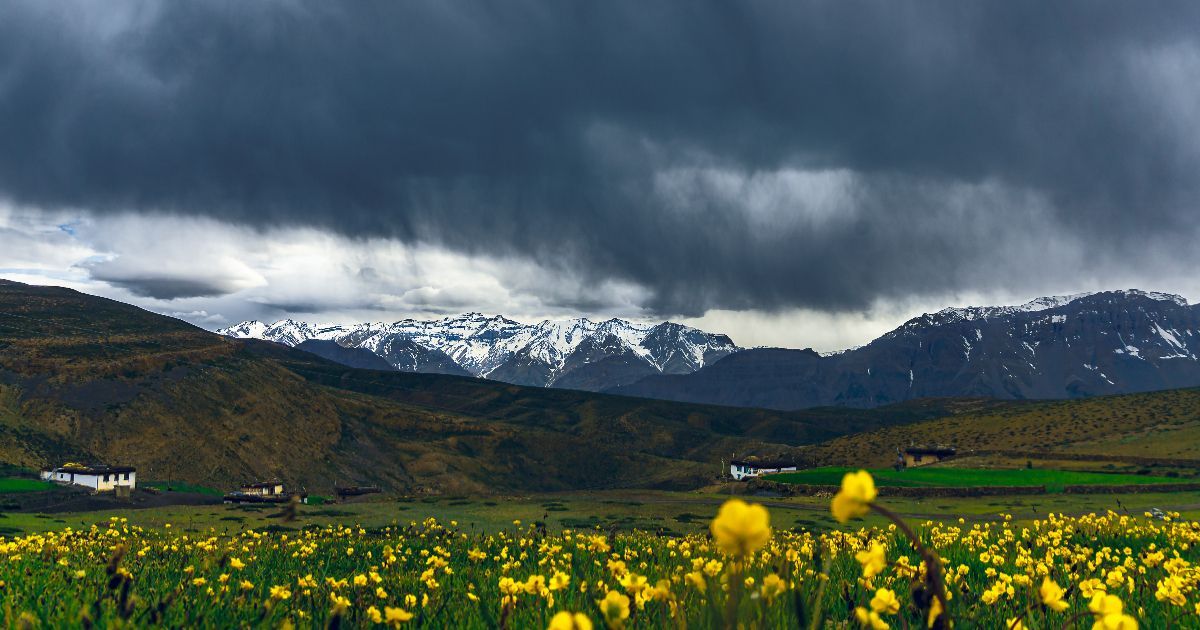
Valley of Flowers Trek Guide 2025 🌸
The Valley of Flowers in Uttarakhand is one of India’s most breathtaking monsoon treks. A UNESCO World Heritage Site, it transforms into a colorful alpine carpet during peak bloom.
1. Best Time to Visit (Blooming Season)
Unlike most Himalayan treks, the **best time to visit Valley of Flowers is during monsoon (July–September)**.
- June: Snow melting, fewer flowers.
- Mid-July to Mid-August: ✅ Peak bloom.
- September: Clear skies, fading flowers.
2. Trek Route & Distance
The Valley of Flowers trek is a **moderate 3-day trek**:
- Day 1: Govindghat → Ghangaria (13 km)
- Day 2: Ghangaria → Valley → Ghangaria (8 km)
- Day 3: Ghangaria → Govindghat (13 km downhill)
⚠️ Altitude ranges from 6,000 ft to 11,500 ft — **acclimatization in Joshimath is highly recommended.**
3. Permits & Entry Rules
- Permits issued at **Govindghat Forest Office**
- Valid for **3 days only**
- Entry between **7 AM – 12 PM only**
- No overnight stay inside the park
4. Essential Packing List
- Waterproof jacket & backpack cover
- Good trekking shoes (anti-slip)
- Thermals, wool socks & gloves
- Basic medicines & AMS tablets
- Trekking pole (highly recommended)
Frequently Asked Questions
When is the Valley of Flowers open for trekking?
The Valley of Flowers National Park is open from **June to October**. Peak blooming happens from **mid-July to mid-August** during the monsoon.
How many days are required for the Valley of Flowers trek?
A minimum of **3 days** is required: Day 1 Govindghat to Ghangaria, Day 2 Valley visit, Day 3 return. Many add **Hemkund Sahib** as Day 4.
Is accommodation available inside the Valley?
No. Staying inside the park is **strictly prohibited**. All hotels and lodges are located at **Ghangaria village**.